Wednesday, May 15, 2013

Is Solar Thermal Too Expensive?

Recently we were invited to visit with Patrick Spearing and Suni Ball at Enerworks in Woodstock.  These guys do nothing but solar thermal.  We were pretty much blown away by their knowledge, professionalism, and by how much they taught us about solar thermal in one afternoon.  I'd like to recount some of the knowledge transfer as a way of taking notes.

Narva Solar Thermal evacuated tubes and heat pipes


Solar Thermal Collectors:
Enerworks uses Narva glass tubes for their evacuated tubes.  Narva is long established as a UV-light glass tube manufacturer in Germany.  Making high quality tubes for evacuated solar thermal was a natural extension for them, and they've done some interesting things to address two critical issues:  Vacuum, and stagnation.  Apparently you will find it very difficult to find any warranties on the vacuums of evacuated tubes.  This is because the borosilicate glass usually used is actually more permeable to helium than regular soda-lime glass.  Why use borosilicate glass, then?  I think it is because the clarity of the glass may be better than regular glass, and perhaps this is cheaper than manufacturing the low-iron soda-lime glass that Narva uses. Anyway, Narva tubes are evacuated to 10 to the -6 torr, (pretty deep vacuum), and the vacuum is guaranteed for 10 years, so this is a big deal.  The vacuum greatly improves the efficiency of the collector, and it also protects the materials inside the heat pipe from freezing.  In addition, the Narva tubes are single-wall, which makes them very robust.  The double-wall tubes are highly susceptible to breaking due to the long moment-arm that multiplies the stresses on the part of the tube that supports the whole inner glass wall.

The other thing is stagnation.  Somebody actually did a bunch of research and analysis and designed a heat pipe which self-limits at ____ temperature.  We asked how this was achieved, and the answer was thus:  By controlling all the physical factors affecting heat pipe design, one can actually make a heat pipe that self-limits its heat transfer and therefore its temperature.  These heat pipes are carefully manufactured to control:

  1. internal volume
  2. chemistry of working fluid
  3. volume/mass of working fluid
Without tight control of these parameters, there can easily be run-away temperatures and significant system stresses which can cause vapour-block, glycol break-down, etc.  It appears the Narva heat pipes contain a lot less working fluid than other heat pipes.  This one fact is sensible to me - it means they can completely vaporize their working fluid, which can limit the heat-pipe's upper temperatures, as well as reduce damage due to any freezing.  It also seems to me that heat-pipe technology is one area in which lower-cost and copycat products may be hard pressed to perform in.

Another Issue:  SRCC ratings for solar panels are somewhat skewed or inaccurate for solar evacuated tube panels.  They caount the whole area of the panel without subtracting the spaces between the tubes.  apparently the Solar KeyMark metric is much better to go by.

Will continue this another day as there is much more to tell.

Saturday, April 27, 2013

6 Emerging Solar Technologies

As I've mentioned before, there is this major energy and renewables revolution taking place right now, and it is moving so fast.  I've read literally hundreds of articles on solar energy innovations poised to lower the cost and increase the output of collectors, all the way back from nanotechnology solar paints - an innovation that seems to have started at the University of Toronto maybe 8, 9 years ago.  Sadly, I've not really been cataloguing these but I'm going to make a start on this now.  Here are just this morning's findings:
The Mother Nature News website really interesting:
http://www.mnn.com/green-tech/research-innovations/blogs/5-breakthroughs-that-will-make-solar-power-cheaper-than-coal

And a Sixth one is here; Rectennas, or Nantennas - Definitely appears to be one of the more important leaps forward:
http://today.uconn.edu/blog/2013/02/uconn-professors-patented-technique-key-to-new-solar-power-technology/

I've been working on other peoples projects again recently and one of them involves solar thermal technology, mainly because solar thermal can collect up to 80% of the solar energy that strikes it, as opposed to solar PV, which, though cheap, still takes a lot of area at 15 to 21% efficiencies.
But for all those installing solar thermal on their roofs on projects happening right now, I recommend you also install a conduit or wiring for future PV panels to replace the thermal panels.  Of course, I also recommend the roof structure be given some thought - don't just install the weakest cheapest roof to carry the snow and rain loads - make your roofs face the sun, and make them strong enough to carry solar panels, including hybrid panels, and energy storage panels!


Saturday, April 13, 2013

We are in an Energy Revolution!


Watch this video.  It surprised even me - a person already enrolled in the revolution we are witnessing.  It expresses the coming changes in a way that tells everyone this is NOW, and this is huge.
Think of this:  Sunpower was a 10million dollar company in 2004.  Now it is over a billion dollar company.


Recently I've been working with a number of other clients in developing model designs for various buildings, and I keep encountering the doubts that people have about high performance construction, especially regarding finding the sweet spot in terms of optimizing their project and the resulting costs.
I often find myself telling them that what they may not realize is that Passive House is just the beginning, and the 'sweet spot' has already, for the most part, been realized by the Paassive House research which has shown again and again that the thing to do is to build to the standard.  This is just the beginning because net zero is next, and then net positive, and complete self-sufficiency.  Only three years ago, net zero was a highly expensive and ambitious endeavour.  Today, numerous governments are talking, even announcing, that their building codes will mandate net zero in a few short years (!).  We are in the midst of a pretty wild and disruptive energy and renewable energy revolution!
It turns out Passive House is, for the sake of simplicity, the proper tool for the creation and design of building envelopes that are the right foundation for this coming energy revolution.

So, all those out there who are feeling timid to go all the way and build to the Passive House Standard, I say, just  go all the way!  You won't regret it.

Look at this host of technologies:

Sunpower announces the X21 series of PV solar panels.  These are 21% efficient, - compare this to the standard PV panel efficiency of 15% - this is some 40% increase from before.....These are available NOW, but sadly, not in Canada.  Look here:  http://us.sunpowercorp.com/homes/products-services/solar-panels/x-series/

Check out this new wind generator - no turbine, no blades, no moving parts!
This same technology applied in reverse is being investigated for aircraft propulsion

We are completely awash in technological innovations right now.

Sunday, March 3, 2013

Point of Use Water Heating

Imagine going to the kitchen sink and dialing in the water temperature you want.  Then open the single tap and voila - water at the temperature you want, at any volume.  When you close the tap and re-open it, the water is at the same temperature.  Again and again.  No having to adjust to the right temperature every time you open the tap.  Wouldn't that be luxurious?  The technology to do this was available decades ago, but we keep doing things the old way...

Achieving this is simple.  One need only provide a single water line to the faucet.  In that line is a point of use (electric) water heater with a remote control.  The remote control is mounted near the faucet (EcoSmart makes this kind of unit with remote).  The heater is somewhere nearby, but out of sight.  The only issue with implementing this is that the efficiency of water heating is always just 100%.  However, one advantage is that there is no hot water anywhere in the system - just at the last two feet of water tubing just before the faucet.
No standby losses, although these days they are small in better tanks.

Consider the shower.  Imagine again, only one water line supplying the shower, with an inline point of use water heater with remote.  In the shower, we dial in on the digital display the water temperature we want.  Shower water comes out of the spout at precisely that temperature.  The warm water leaves the shower via the drain, but here, we have a heat recovery device which is some 80% effective.  We give most of the waste heat to the incoming cold water stream just before it contacts the POU heater.  Then the heater finds it very easy to raise the water temperature just the last say 10degrees C.  In this way, we minimize the heat that leaves the house and the energy and power needed to heat our shower water.  If we want a bath, things are quite a different story, and I haven't really thought about what I'll do in that case.

The drainwater heat recovery devices out there right now are only some 50 to 60 percent efficient.  Even that is saving half our energy to heat the water, so yay, but for some untold reason, none of these devices take advantage of heat pipes, which I plan to experiment with.

Thursday, February 28, 2013

Energy Efficient Lighting for Passive Houses

Been looking long and hard at energy efficient and sensible topologies for wiring a house or a building.
Here is the needs:

  1. Other than power outlets, we need very little energy for everything else - so why wire them with the 14ga Romex?  I'd like to see a new style of wiring for this stuff.  One that more closely reflects the realities of today - very small loads, and more demand for flexibility.
  2. Long term flexibility:  It is really nuts that we wire the whole house and then hide everything behind drywall - it makes it so hard to make adjustments and changes.  Why can't we have a wiring and control scheme that is modular, flexible, and not expensive?
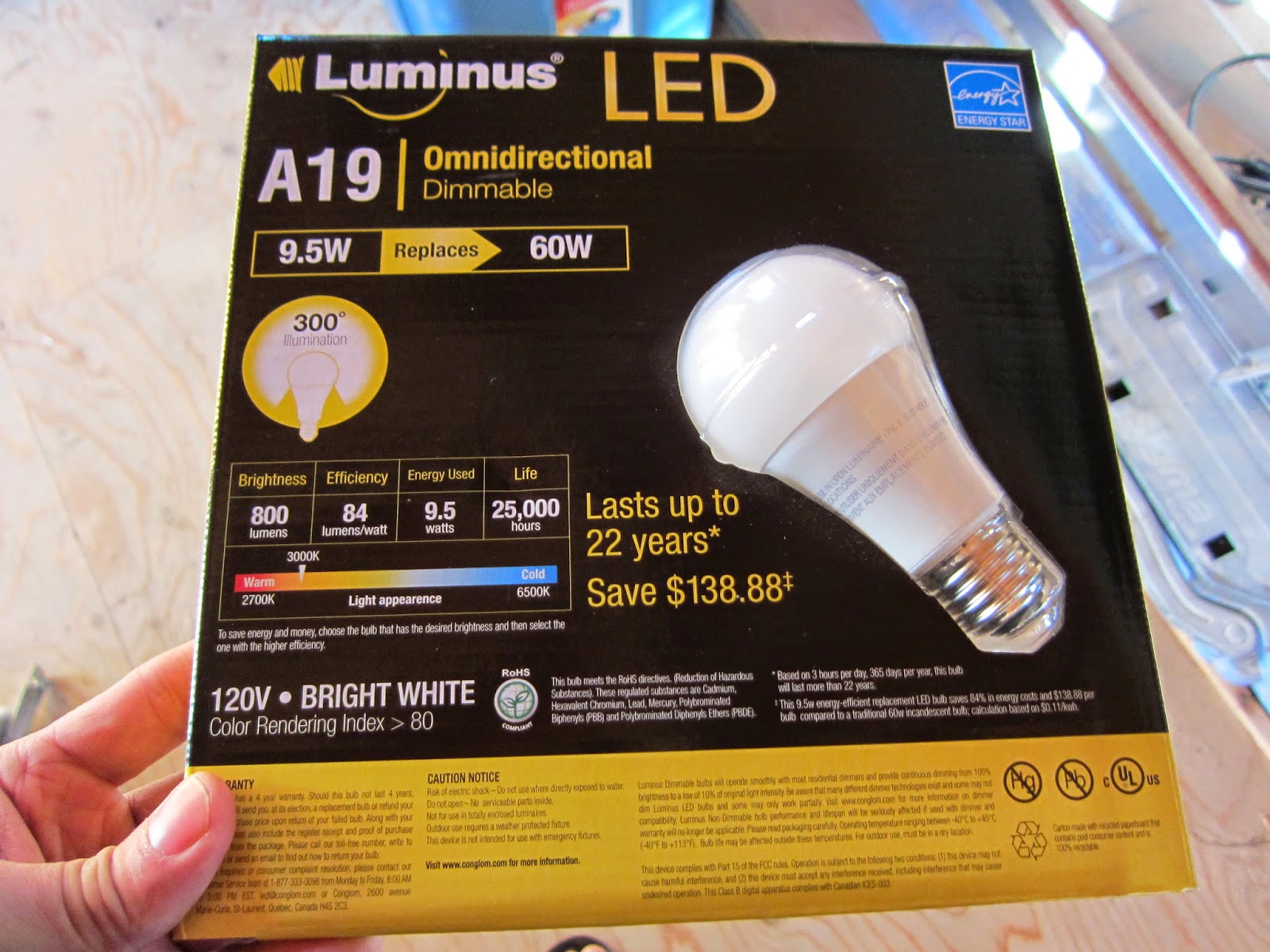
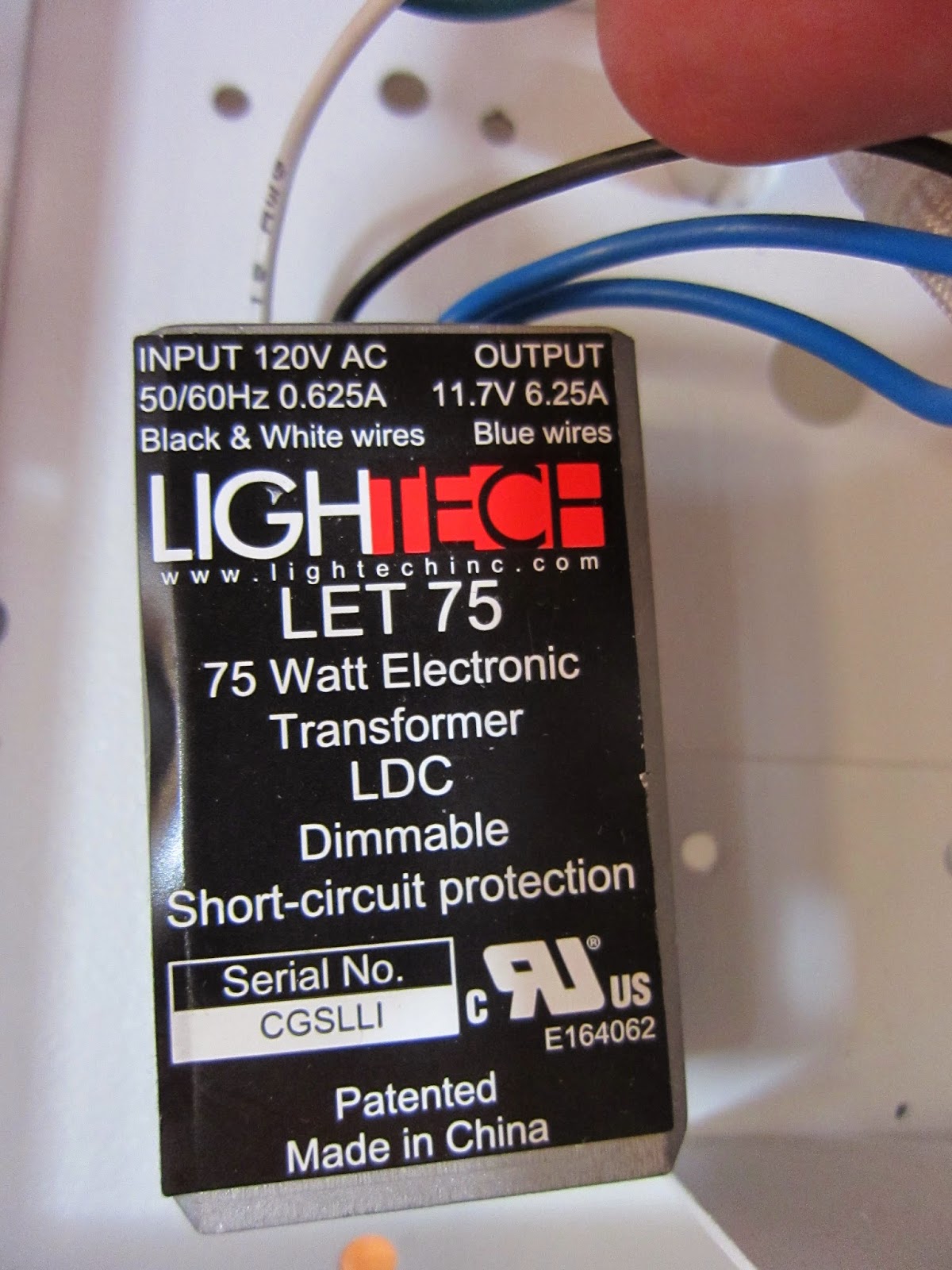
  3. Every CFL or LED light works on voltages not related to household voltages of 120 or 240V.  All these silly LED lights we buy that fit into regular 115V sockets come with power supplies built-in.  While the bulbs can last 50,000 hrs, the power supplies die after 2000 or whatever.  Why not have a central LED light control/power supply to distribute low voltage to our lights and a host of other things like USB charging jacks, clocks, etc.
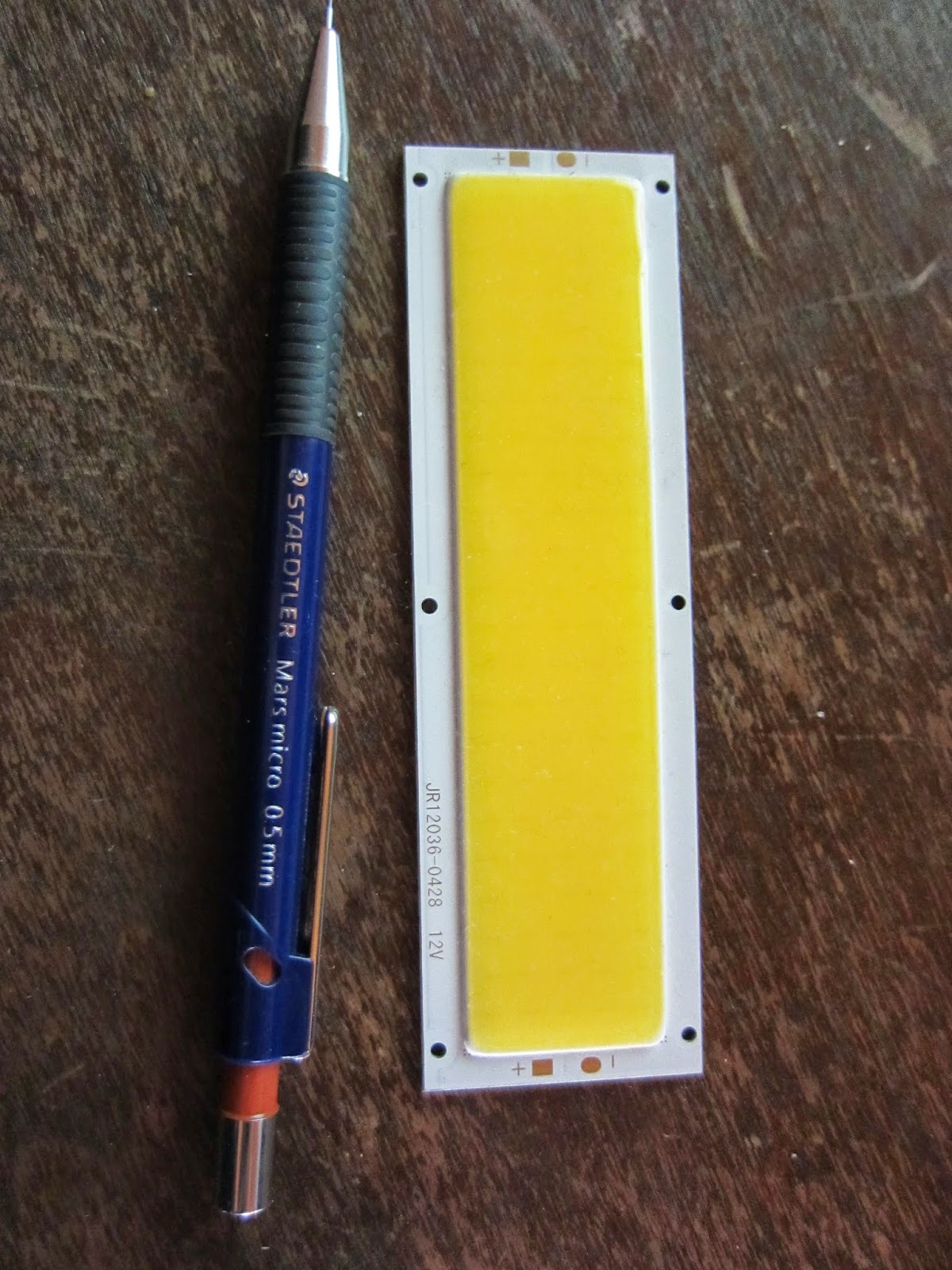
  4. We need some low voltage lights for our exposed beam ceiling.  Ever notice the exposed beam ceilings in magazines?  Most of them don't seem to have effective solutions for their lighting.  Thats because there is no joist space for them to hide pot lights or wiring or electrical boxes.  A lot of times you see the light is run using a metal conduit (EMT) along the joist, and then to chandelier.  These days I always look for this when I see exposed beam ceilings in magazines.  This can be a vexing problem.  Our solution is to use low voltage (hence few electrical code issues).  The wire is small, and we hope to bury it above the plywood subfloor - this should be easy because we are looking at adding acoustic layers to the subfloor top side anyways (another vexing issue).  Then each wire will enter a surface mounted, hopefully very small light fixture  - something like an under-the-cabinet light.  The trick is finding lights like this that are small, beautiful, and give off tons of light on very little power.
Well, it looks like Lumencache is a product that addresses most of these needs, if not all.
Other than the duplex power outlets, everything is wired with CAT5 ethernet cable.  All devices are wired with home-runs to a central box.  This means every light and every switch, and every other point wired with CAT5 is a potential data node.  It also means the house's wiring is highly flexible and adaptable to future changes - 3-way wiring is done in the central cabinet, rather than in the walls.  A switch can control any light, and this can be changed, and it can control any number of lights, or it can control something other than lights. A light fixture can be changed to be (theoretically for now - not sure if any product yet exists) a smoke alarm, or it can be both, or perhaps a motion sensor with light, or a WiFi Hotspot....
The possibilities are endless.  That is why I am wiring the house with CAT5 instead of Romex.
We will be having CAT5 at every window opening, every door, every light fixture, every switch, and every thermostat, HVAC component, sensor, etc.  In addition, every data point and telephone point - the data and lighting use the same wire, after all.  Sometimes 2.  This makes it all so simple, and I would say very future friendly.  
The only thing which I might wire with different cable is the in-wall speakers.  Ethernet connected speakers might be OK, but from what I hear, not quite that good as yet, so we'll probably wire them with 18gauge or something like that.
There are other developments in the home automation field which are exciting.  OpenHAB is an open-source software framework for home and building automation.  Just appeared on the internet last year.  I hope everyone who makes automation gear pays attention to that standard....
These days, the way to go seems to be to control the house with a small PC, powered by an atom processor.  These are cheap, and consume very little energy - something like the EEEBox 1033.  On this you can run a home automation software like Mcontrol V3.  Only $170 or so online.  Apparently very open and has drivers for hundreds of different protocols so can connect to and talk to virtually everything from your smartphone.

Thursday, February 21, 2013

Link to the Passive House news on Global TV

Here is the link to the Passive House video that was aired tonight on Global news: 

We didn't appear much in the piece, but there were lots of footage of our house, which is most of the construction in this video.  The workers are our crew members, doing actual work two weeks ago.  They used a lot of the information supplied by us, but Lyndon only said one sentence 'on air'.  The filming was supposed to be included in an episode about innovative things happening in construction across Canada, but it is presented in this news piece instead. Hopefully, this will lead to more people knowing about the possibility of passive houses in Canada!

Sunday, February 17, 2013

Our Passive House on TV

Global TV recently approached us for an interview for their upcoming 'The National" news show.  The episode will air this Thursday, Feb 21, 6:30pm on Global TV (channel 3 in Toronto).  They were interested in what Passive House was, and they took some footage of our project, showing the spaces, the double walls, etc.  I hope we don't look too silly!

Friday, January 25, 2013


Thought I would post some of the older  photos.

Lovely attic space will be a sea of cellulose soon.


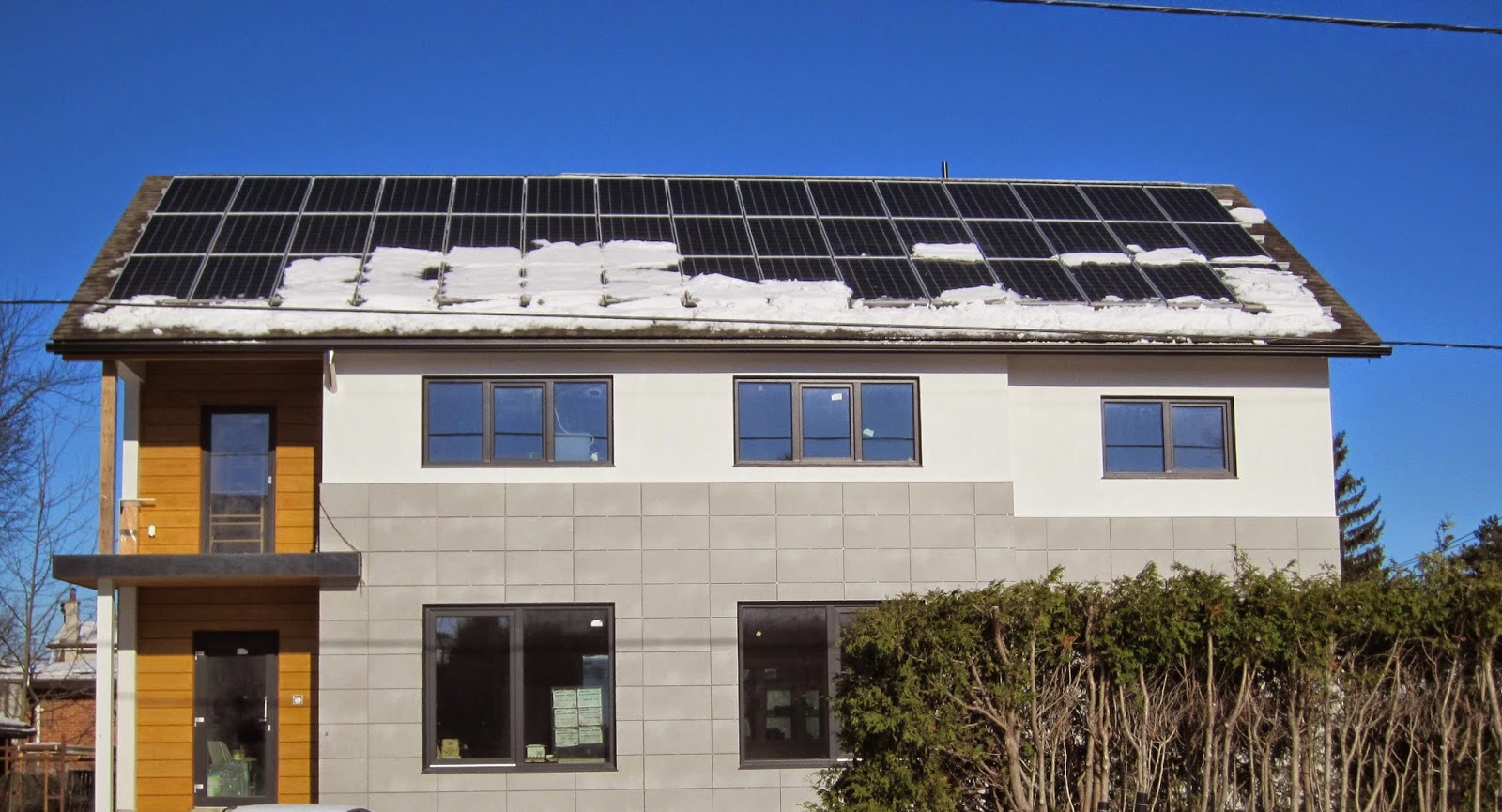
Solar panel installation.


A view between the double wall frames.

Stainless Steel Exterior Post Anchors

Look around and you will see many exterior columns on residential buildings suffering from corrosion at their bases.  At least I do.  A major reason for this is because pressure treated lumber is frequently used for exterior columns, and the preservative is not compatible with the steel column bases and screws you can get from the lumber store.

One of my beefs with exterior columns is how there is no easy and accessible solution to mount them properly at their bases.  Most of the column bases seem inadequate to me, and in addition they are cheap looking.  Often they are set with their bottom plates in contact with the concrete - an invitation for crevice corrosion.  I looked and looked for solutions, but found them hard to come by.  Finally, I decided to go with steel columns set off the concrete with stainless threaded rod anchors (5/8").  Here are some pics:

Columns offset from concrete SOG about 45mm
5/8" (15mm) stainless steel threaded rod anchors.

That is a temporary door in pic.  Just showing the steel columns and how they're not in contact with the concrete.  Stainless anchors and nuts.

Steel Balcony Frame:  Designed beyond code minimum so as to be strong enough to support a crowd overlooking whatever is happening below.  The frame is completely isolated from the interior of the building which avoids what would be very significant thermal bridging.  this is easy to do when the building is made with a double wall system.  Note the offset joist/outrigger at the far left:  the little 4" x 4" void is to accommodate a concealed downspout.

The floor will be made from 1/8" thick stainless plate welded to the steel.  Probably have wood slats on top of the smooth stainless.

Snow Melt for a Passive House and Recent Photos

Well, we finally poured our slabs on grade and front steps - in Nov. and Dec.  We decided to place snow melt heating loops in the slabs, and it does seem a bit extravagant, but if we actually use it, it means no application of salt to melt ice, and clean, safe entries to the building, especially for the front steps.  As we plan to eliminate the gas service, there will not be any strong heat source to service these snow melt areas -unless we use a wood boiler!

So the idea is to simply run the wood boiler at times when we are expecting significant snow and we need to clear ice from the front steps.  In working out the heat inputs and hydronic flow rates for glycol, etc, I realized a big lesson for exterior snow melt applications.  Normally, radiant slabs are assumed to benefit from high thermal mass - that is when they are indoors, one wants a constant temperature, and heavy massive slabs help to regulate and temper any significant fluctuations such as high solar loads, etc.  Thus, the hydronic heating pipes are frequently installed submerged in slabs of concrete or gypcrete, etc.  However, snow melt works in reverse, in a sense.  In a snow melt application, one wants LOW thermal mass to avoid heating up a big, massive concrete slab just to melt off a thin layer of snow or ice.  Doing the calculations, one finds that it is actually easy to spend more energy bringing the slab to temperature than melting the snow or ice, even when the slab is insulated underneath.  Wish I knew this before I did mine, but for all you guys and gals out there thinking of snow melt, consider this.  Unfortunately, I don't know of any practical solutions to this whole issue at this time, though I have some ideas - we must keep the slab as thin as possible, insulate well underneath, and insulate the edges as well, if practical.  The idea I have been toying with is using a stainless steel or steel plate as the top surface of the slab - or even building the top of the 'slab with a series of rectangular stainless steel tubes and run the heating fluid through these.  This would place the fluid in nearly direct contact with the snow/ice, and diminish heat transfer to the concrete.  The plate would need to have a traction surface, which is an issue because I don't like diamond plate (there is a company 'Algrip' making beautifully dimpled surfaces via laser deposition of metal - no idea of price).  And stainless steel is very cheap right now - just about twice the price of steel.  But it does seem extravagant....

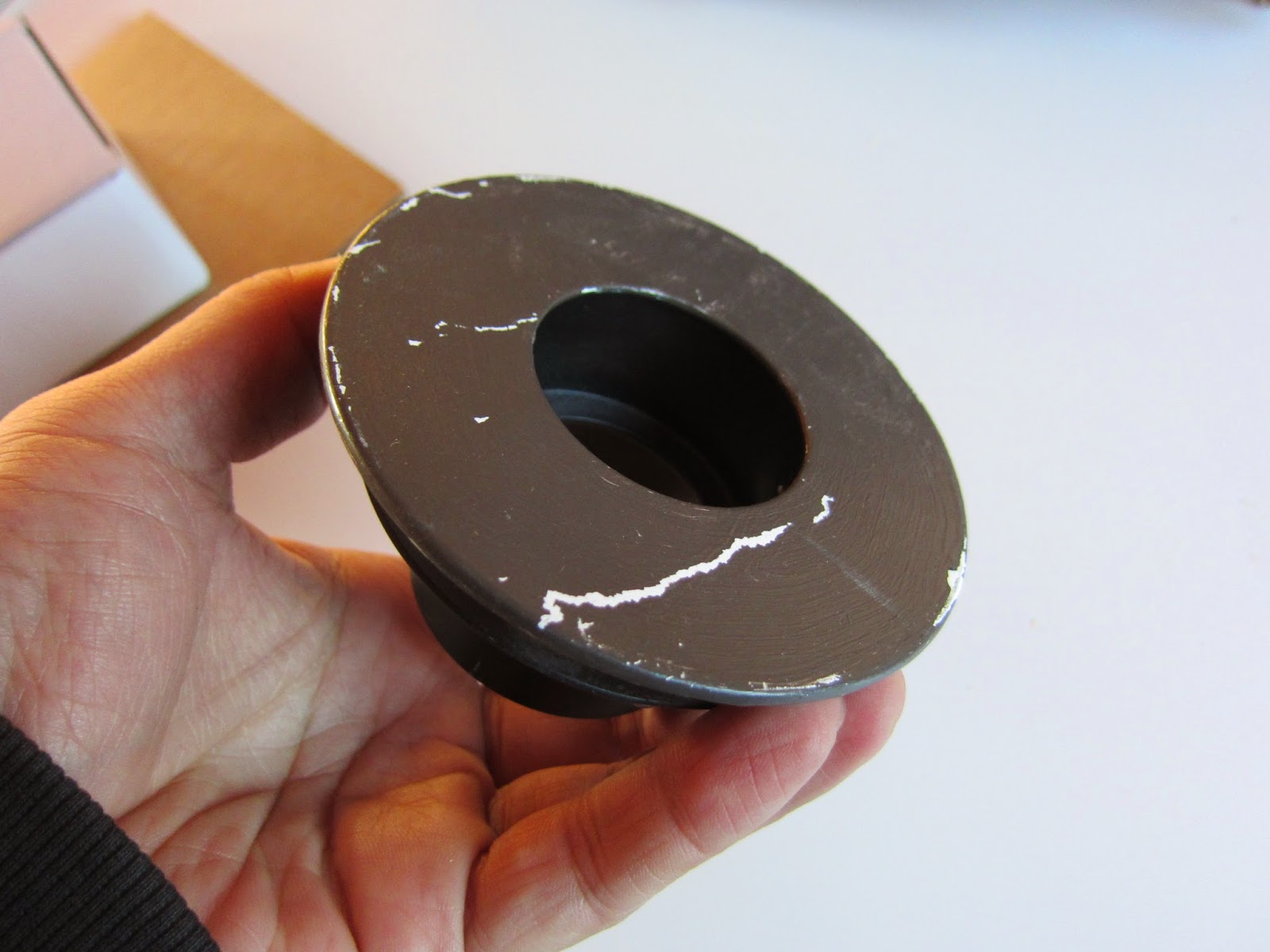
On another note, snow melt components are priced into the thin air of the mountains.  Companies such as Uponor and Viega make the snow sensors, and they are absolutely ridiculous - I cannot understand why.  An ABS plastic housing that holds the sensor (needed during rough-in/casting of the slab) which should cost maybe $20 (perhaps for lack of volume in production), instead commands some $150 in the plumbing/mechanical supply store.  See pic;

This little kit of parts is $150 (contractor price).  The black plastic disc/cover is discarded when the snow melt sensor is installed.  The tube-like thing is made of steel and the temperature sensor is to go into that tube, which sits inside the slab.  The sensor itself is about $1000 contractor price (retail is $1700).
The sensor is just a couple of plates of brass separated by a space.  The resistance between these plates is reduced in the presence of snow and this change triggers a signal which becomes the snow melt system's demand for heat.  Very simple, but the darn sensor is about $1000.  I say it's worth $50 at most.  Since we are no longer at the beginning of the project and money is getting more expensive, we opted to make our own plastic housing and later, when the house is finished and there is more time, we will make our own snow sensor, if needed.  After all, a manual system is not much of an issue - in any case, it is often desirable to heat the slab well before snow appears.
Look closely and you'll see we placed some pipe insulation around the pex tubing where it enters the building.  This is to cushion the tubing in case the slab moves relative to the building.  We also agonized over where to enter the building.  In the end we opted to drill through the wall inside the slab volume, but we drilled the hole with a significant slope so any water from rain or snow will find it harder to flow into the building through those holes.
Add caption
Here is our rough-in:
DIY Rough-in for snow melt sensor made from common plumbing parts - 4" clean-out - we would have to make an adaptor plate to adapt the actual sensor to this bolt pattern, or make our own sensor, which is more likely.

Below are some photos of our snow-melt piping installation.  BTW, I mentioned this to a contractor and he told me they never install 1/2" pex for snow melt - they use 5/8" minimum.  I double-checked my calculations and feel very comfortable with the 1/2" pex - but we'll see if it performs when the time comes.  He is probably thinking of larger areas like driveways.  In our case, it is only on three little concrete slabs.